Kelowna • Okanagan • Heat Cable Systems
HEAT
TRACE.
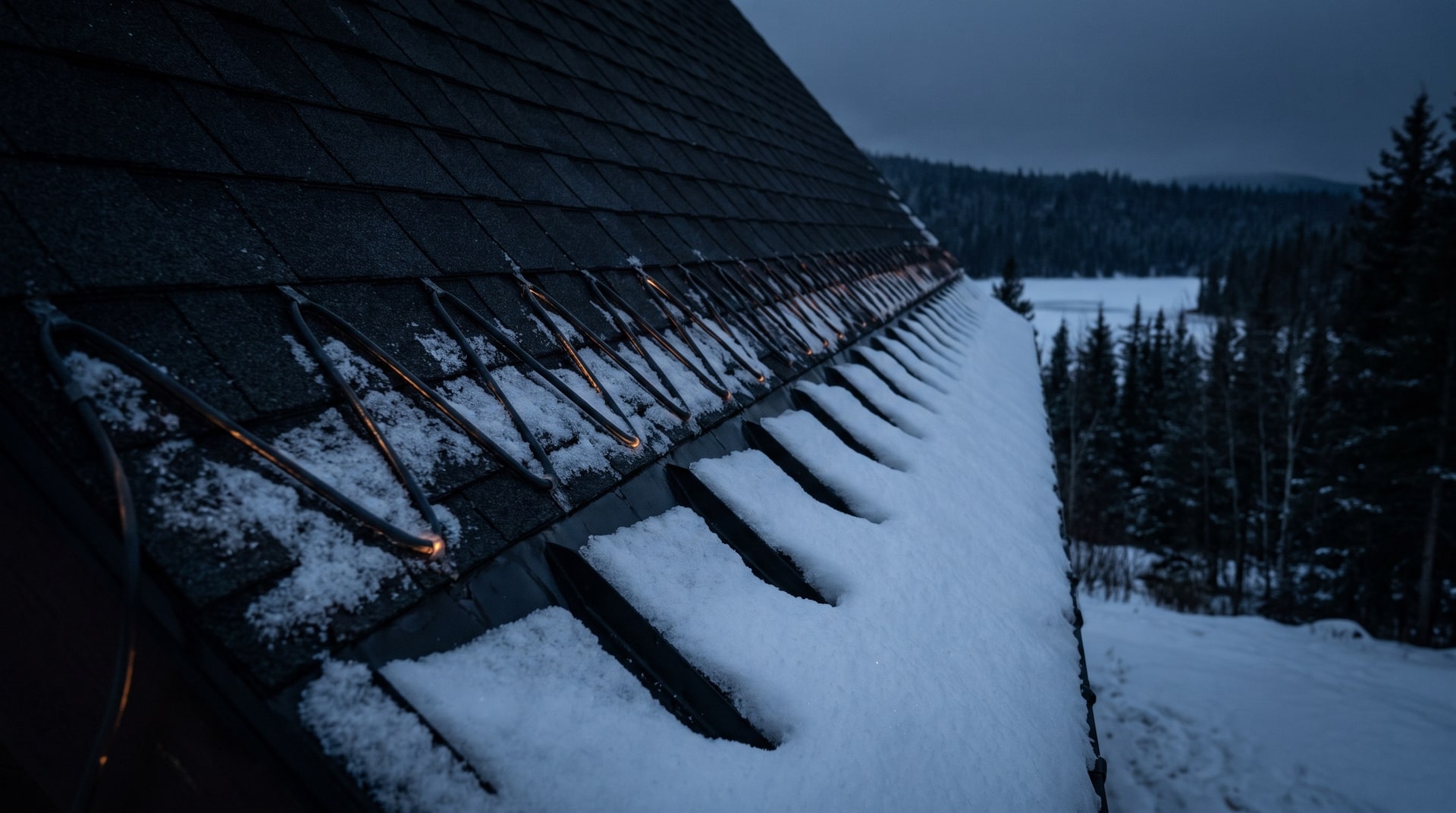
Self-regulating electric heat trace cables run through your gutters, valleys, and eaves and switch on automatically. It keeps drain paths open through the melt and refreeze, so nobody is up a ladder in January chipping ice.
Ice Doesn’t Just Sit There. It Builds.
Ice forms in your gutters, fills your downspouts, and packs into your valleys. Once blocked, meltwater has nowhere to go — it backs up under shingles, saturates your decking, and starts the cycle of rot and damage. Where a roof can be made cold, ventilation is the first fix. Where it cannot, heat trace keeps the drain path open.
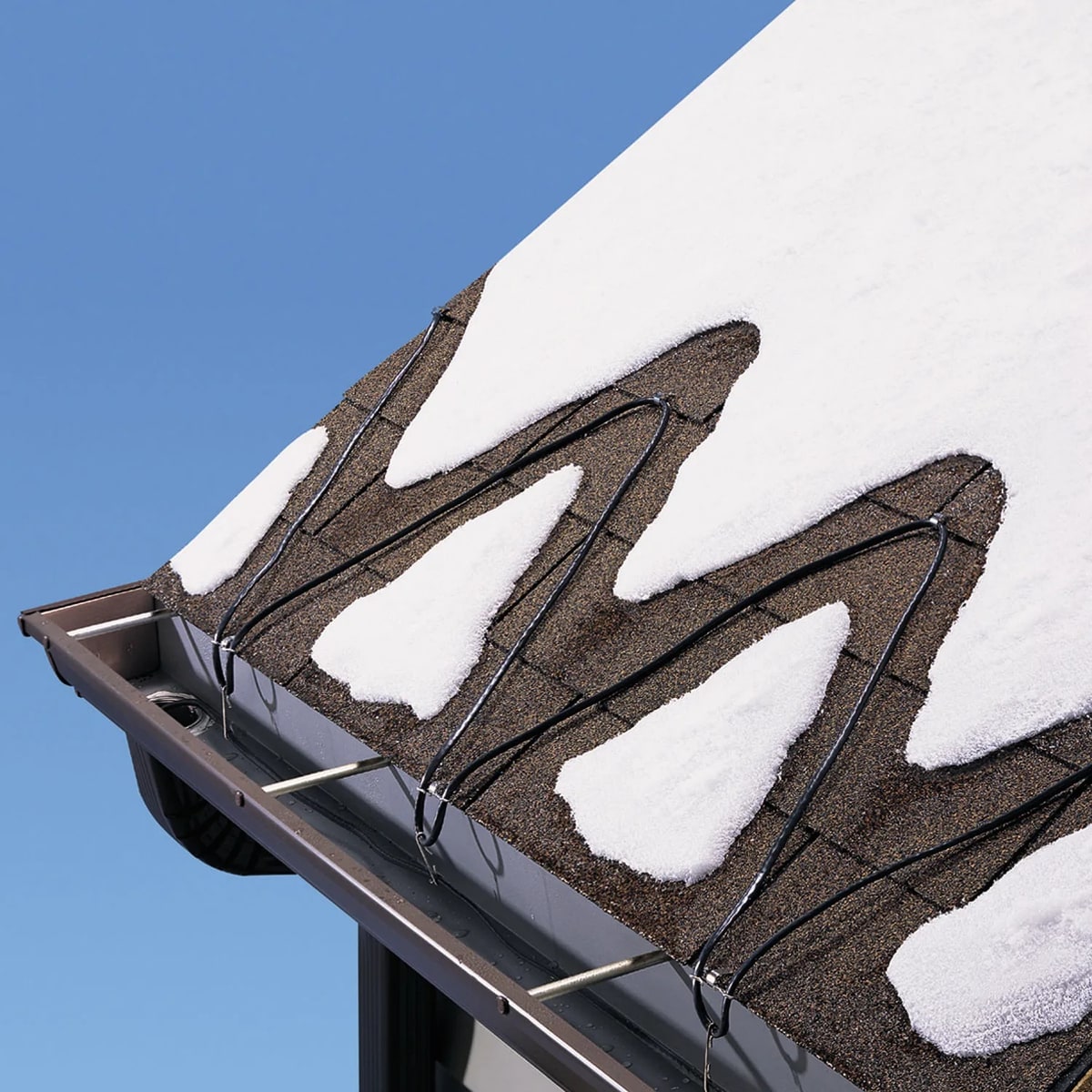
A properly installed heat trace system activates automatically when conditions are right, keeping critical drainage paths open.
Complete Heat Trace Solutions
Self-Regulating Cable
Self-regulating cable adjusts along its whole length, not at a single thermostat. Output climbs where the cable is cold and falls back where it is warm, so each stretch draws only what that part of the roof needs — and overlapping runs cannot cook themselves. Constant-wattage cable puts out the same heat everywhere, costs less up front, and cannot be overlapped.
Gutter & Downspout Runs
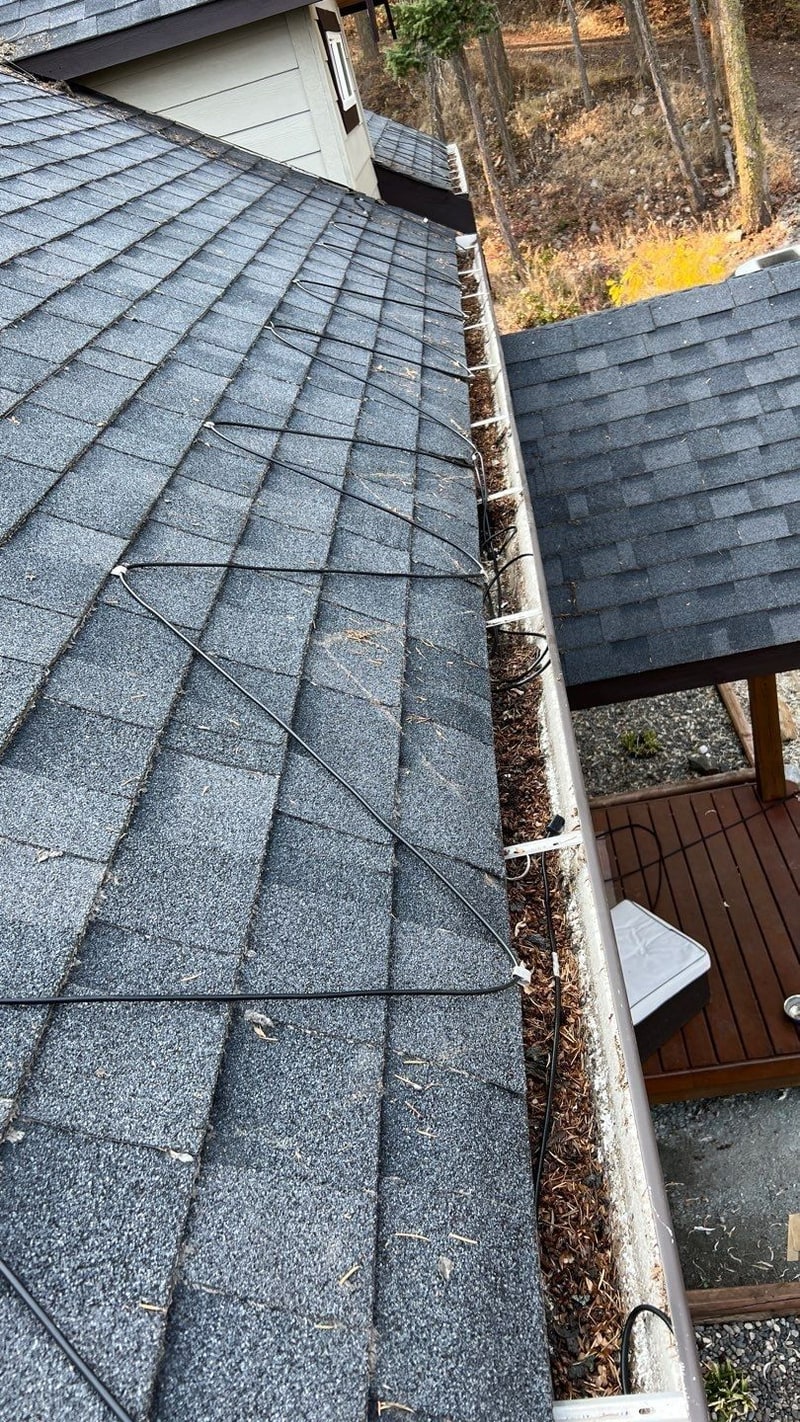
Cable in the gutter and down each downspout that needs it, so melted water has a path all the way out.
Valley Protection
Cable run along roof valleys, where ice packs in. Valley runs start at the eave and carry on up past the exterior wall line.
Thermostat Control
Automated sensors activate the system only when temperature and moisture conditions warrant operation. It stays off on dry, cold days and in warm spells. A controller switches the system on when it is cold and wet. Once it is on, the cable varies its own heat along its length.
Power Only Where Needed
Self-regulating design means the cable draws maximum power only where and when it’s needed. As the cable warms, its resistance increases and output drops.
Professional Installation
Proper cable spacing, clips made for roof heat cable, weatherproof splice connections, and a dedicated circuit by a licensed electrician. Not a DIY heat cable draped over your gutters.
On the Roof
How Self-Regulating Cable Works
Maximum heat output. Cold, the conductive polymer core passes full current.
Reduced output as temperature rises. The core’s resistance climbs, cutting the current.
Minimal power draw. Resistance at its highest, almost no current flows. System idles until needed.
Illustration only: actual output depends on the cable.
This happens independently at every point along the cable — colder spots get more heat, warmer spots get less. No thermostats or zones needed at the cable level.
Got Questions?
Stop Fighting Ice Every Winter.
We’ll assess your gutter system, identify your ice-prone zones, and design a heat trace solution tailored to your roof — at no cost.
No obligation • Custom system design • Circuit by a licensed electrician