
Waterproofing · Kelowna & the Okanagan Waterproofing.
Not every surface that needs to keep water out is a roof. Foundations, decks, balconies, planters and podium decks all sit under constant moisture load — and unlike a roof, most of them get buried or built over, so the membrane has to be right the first time.
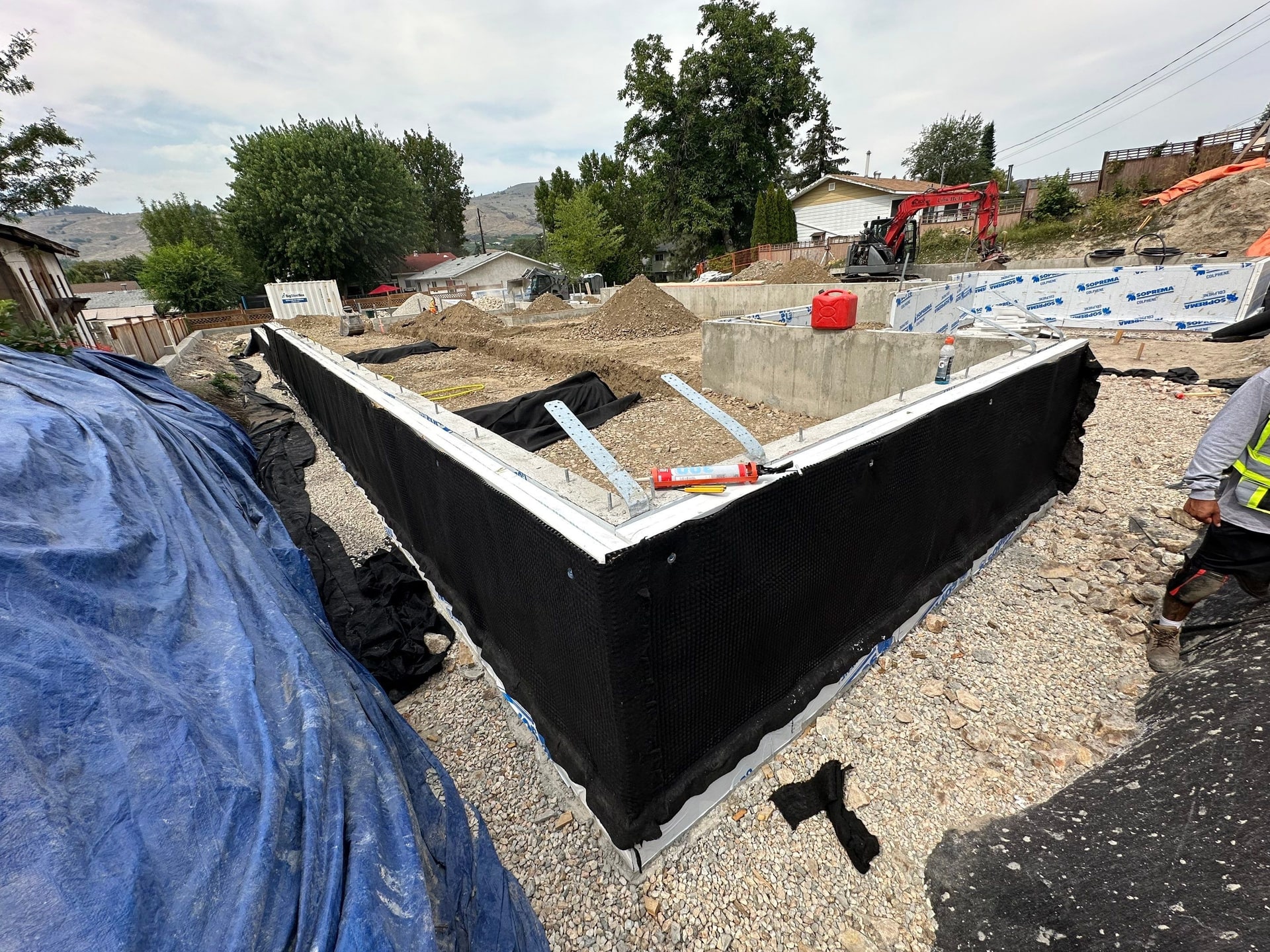
It is the same craft.
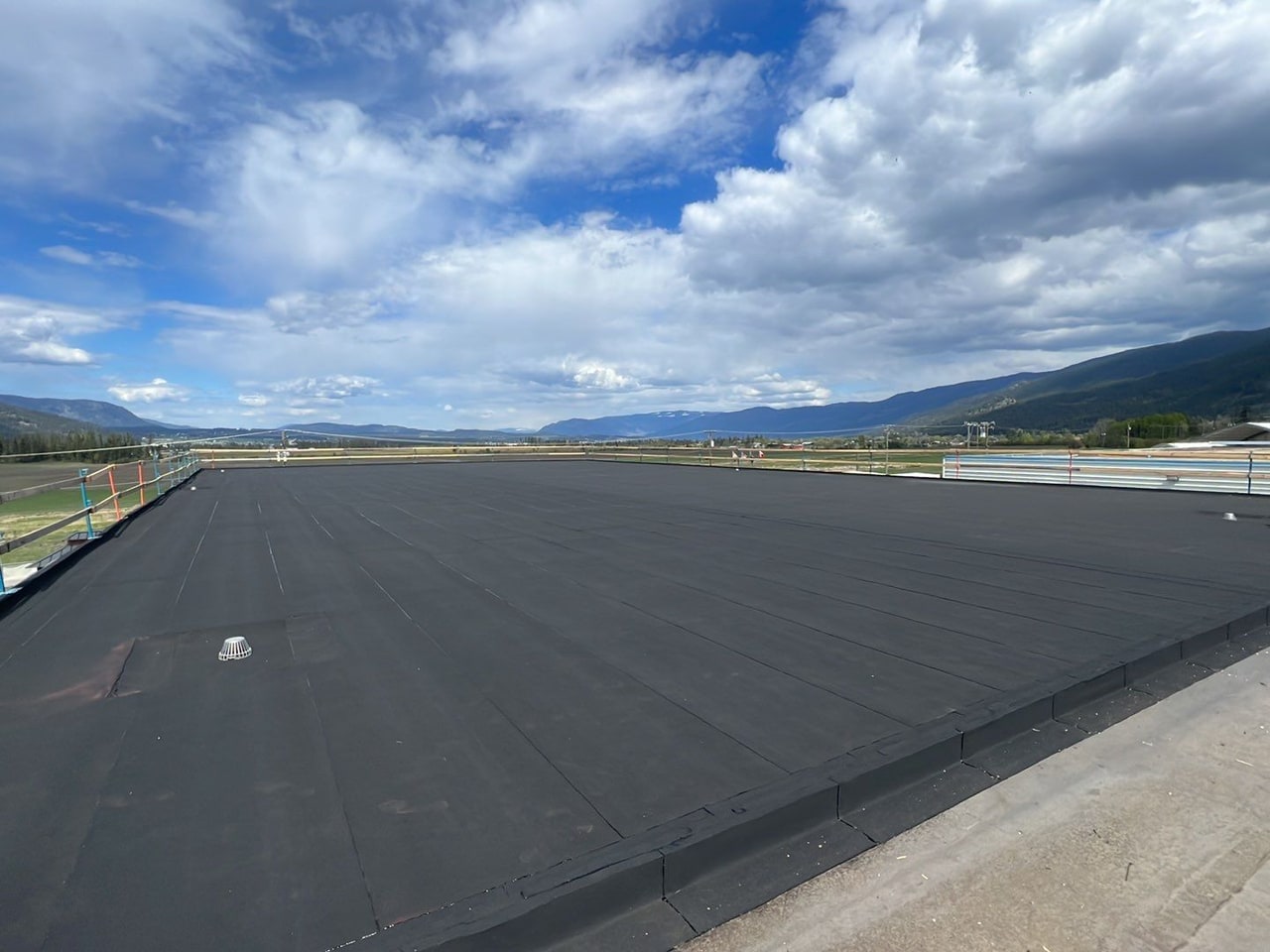
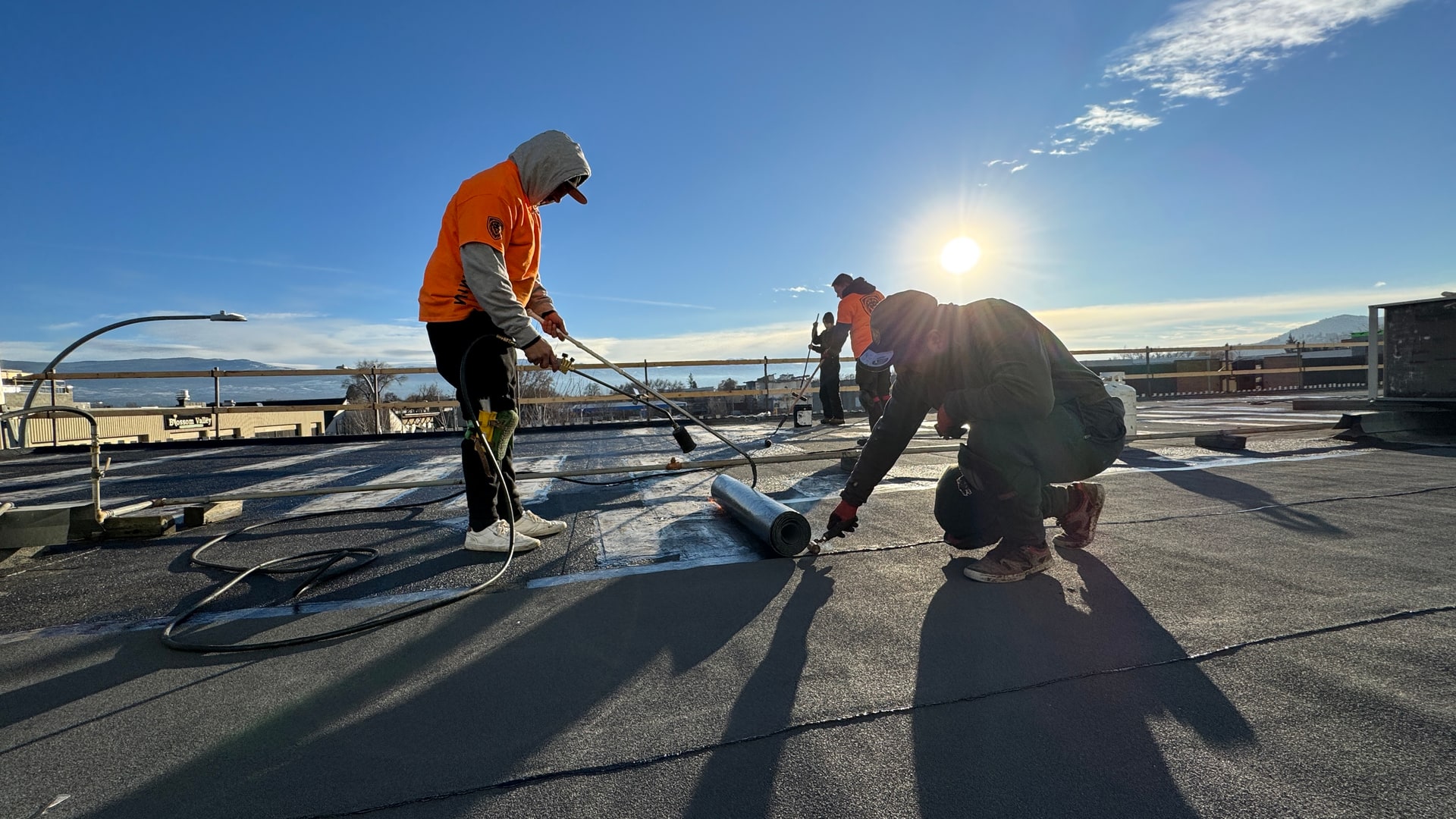
Waterproofing a podium deck and waterproofing a flat roof are the same discipline: a continuous membrane, correctly lapped, correctly terminated, with the details at every penetration and upturn resolved properly. Flat roofs are most of what we build, and this is the same work. The difference is that a roof stays accessible and a buried membrane does not.
That is what raises the stakes. When a waterproofing layer fails under a slab, under a planter or beneath a finished deck, getting back to it means taking apart everything that was built on top. So it has to be done right, and it gets protected before anything goes over it.
Above and below grade.
Foundations & Below-Grade
Membranes on foundation walls and below-grade structures, where hydrostatic pressure works on the assembly continuously and there is no second chance once the excavation is backfilled.
Decks & Balconies
Walkable waterproofing over occupied space. The membrane has to keep water out of the room below while taking foot traffic, furniture and sun — and the perimeter and door sill details are where these usually fail.
Planters & Podium Decks
Landscaped areas over structure are the hardest case in waterproofing: permanent moisture, root activity, and a membrane buried under soil and hardscape.
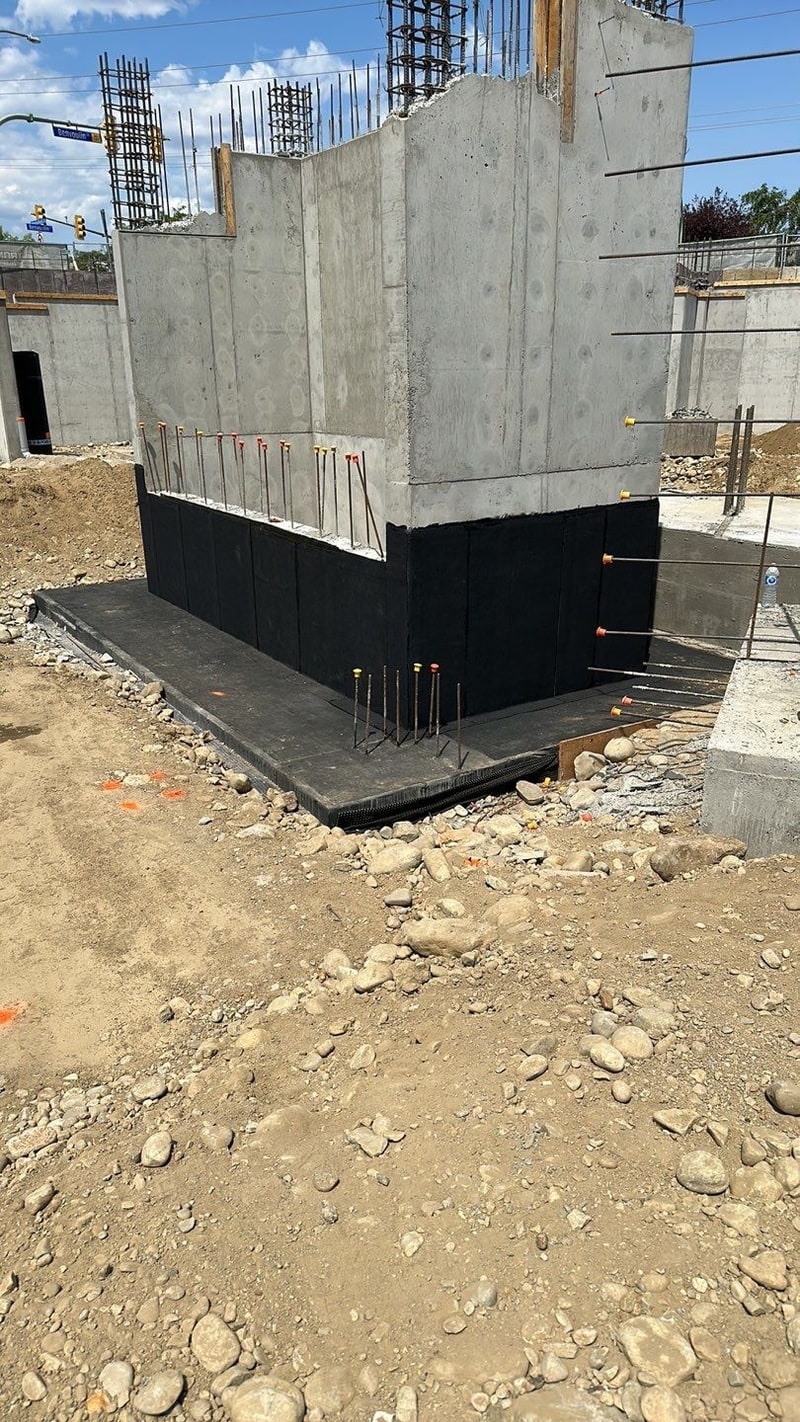
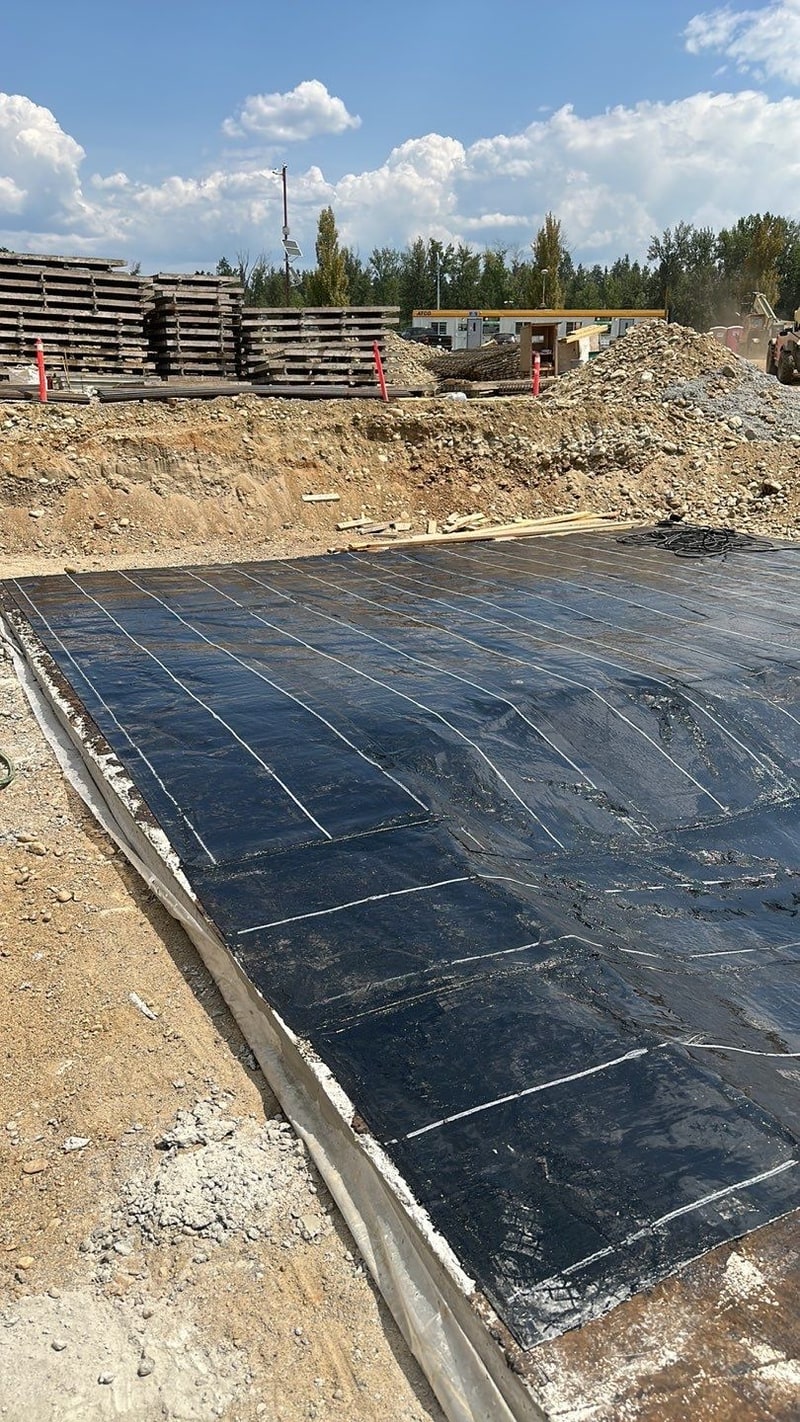
It has to work buried.
Substrate assessment
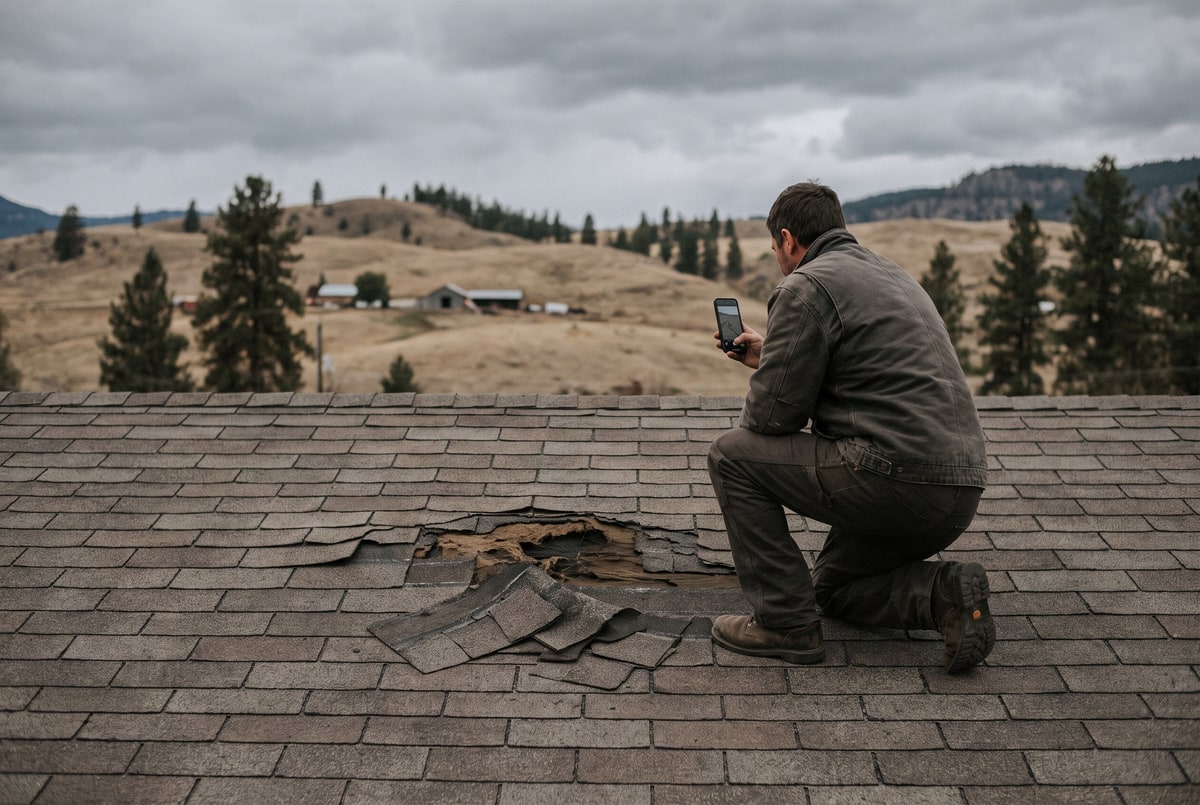
The membrane can only be as good as what it is bonded to. Substrate condition, moisture content and preparation get sorted out before any material goes down.
Sheet membrane
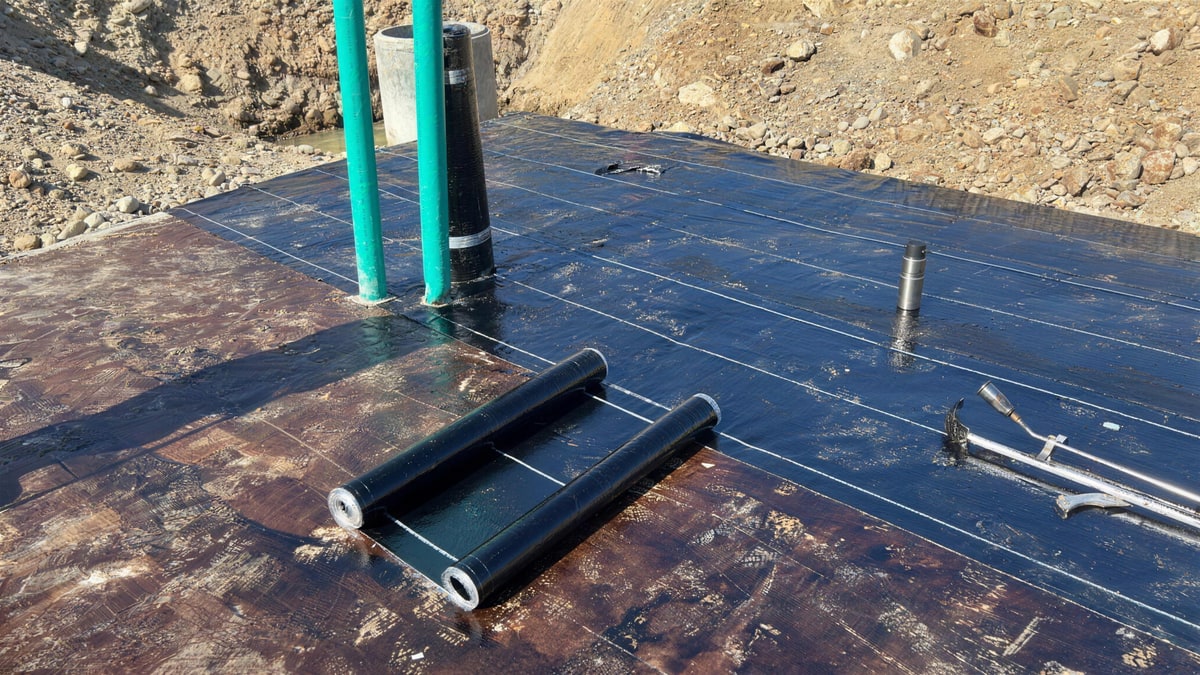
Factory-consistent thickness, lapped and sealed on site, and chosen for the exposure and what is going on top — not for whichever is quicker to install.
Detailing
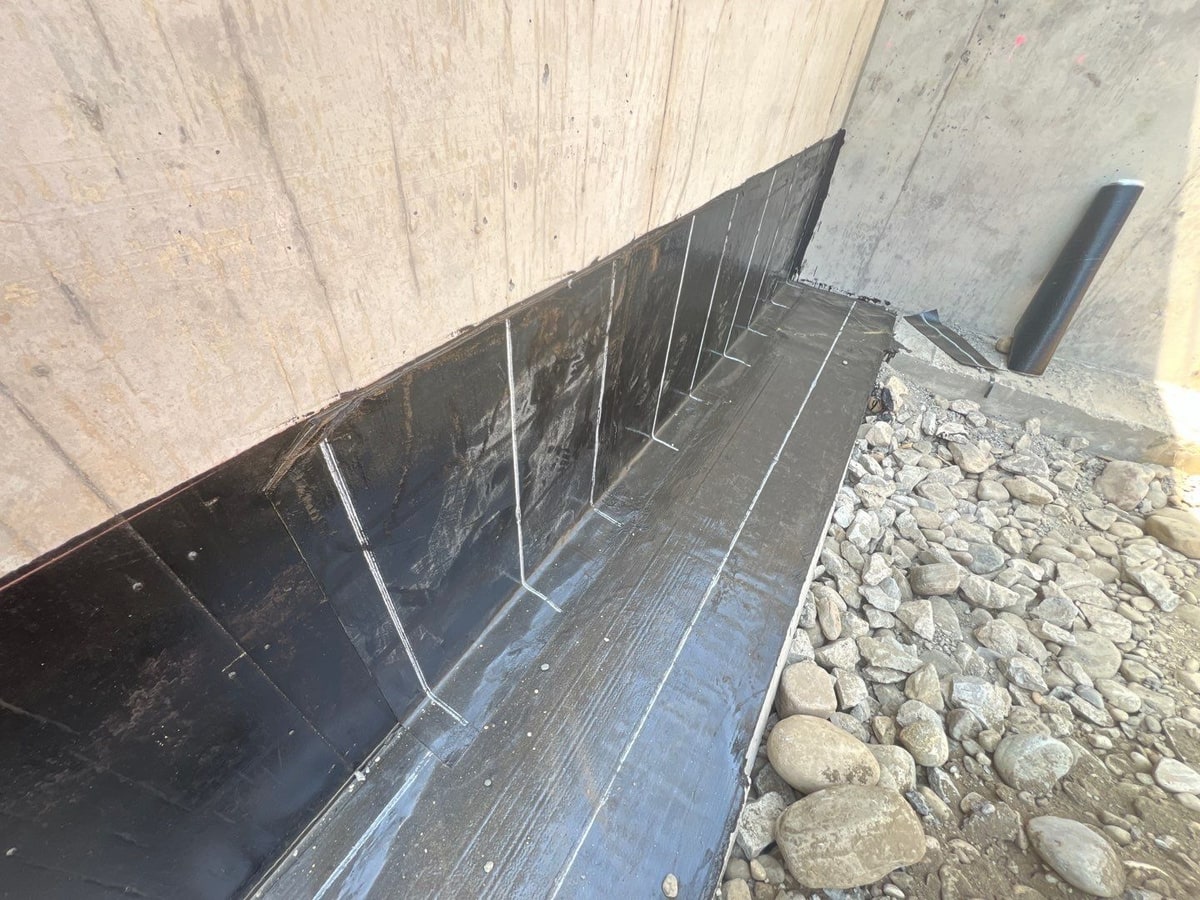
Upturns, terminations, drains, penetrations and transitions. Continuous, correctly lapped and properly terminated. This is where waterproofing succeeds or fails; the open field almost never leaks.
Waterproofing questions.
Keep water out of the structure.
Foundations, decks, balconies, planters and podium decks. Tell us what you are protecting and we will tell you what it needs.
Request a Free EstimateFree estimates • Kelowna & the Okanagan